Clients struggling to share access to their
accounts? Get the access you need in minutes with a free trial of Leadsie.
14 day unlimited free trial
Extend until you onboard a client
No credit card required
Keep access to clients if you cancel
With easy one-link access requests for 13+ platforms your campaigns can go live in minutes, not days. Start free today.
Approved by Meta, Google & Tiktok
Keep access to clients' accounts if you cancel
Secure & 100% GDPR compliant


Losing admin access to your Facebook Page can have detrimental effects on your business. It can stop you from posting, replying to messages, or managing ads; impacting both your visibility and customer experience.
And you’re not alone. Facebook sees hundreds of thousands of compromised or restricted accounts every day, often due to hacking, permission issues, or security flags.
The good news is that in many cases, Pages aren’t permanently lost, they’re just simply inaccessible due to account or permission issues. That means there’s usually a way to recover access!
Follow the steps below to get your Facebook Page back and regain control. 👇
🎥 Prefer a video?
Page admins can lose access for a number of reasons, some of which are easier to fix than you might expect.
🔎 Note: Before diving in, it’s worth quickly checking that the issue isn’t on Facebook’s side. Occasionally, outages or technical issues can affect access temporarily. You can check this using tools like Downdetector.
Once you’ve ruled out login issues and any platform outages, it’s likely one of the following:
💡 Looking for professional help to regain your access? Click the button below, fill out the form and get help from our trusted partner Metaphoric (ex-Meta employees!)
The good news? Yes, you can recover access to your Page, even if it’s been months (or over a year) since you last logged in.
Start with Method 1 (contacting someone who still has full access to the Page) before trying out different methods. This is usually the fastest and easiest fix, since an existing admin can simply restore your permissions.
If someone still has admin access (full control) to the Page, they can restore your permissions in minutes, making this the fastest way to regain access.
Depending on how your Page is set up, here are a few ways to find who currently has access:

Need to request Page permissions from scratch? Here’s how to request access through Meta Business Suite.
1. Click your Page profile picture, then go to Settings & privacy > Settings.
2. Select Page setup>Page access.

3. Check who has Facebook access and contact anyone with full control (types of Facebook Page access).
.webp)
Note: Meta has updated its interface over time, including the transition from Business Manager to Business Portfolio and the New Page Experience. If you’re still using the older (Classic) interface, look for options like “Page Roles” under Settings to find the permissions settings.
When you’re managing multiple client accounts, identifying who has access isn’t always straightforward.
Manual checks in Meta can slow things down due to:
❌ Limited visibility across Pages, ad accounts, and Business Portfolios
❌ Unclear ownership (e.g. past employees or agencies still listed)
❌ Reliance on clients, who often don’t know who has access
❌ Internal back-and-forth with account managers and media buyers to confirm the right contact
But there’s a more efficient way to handle this.
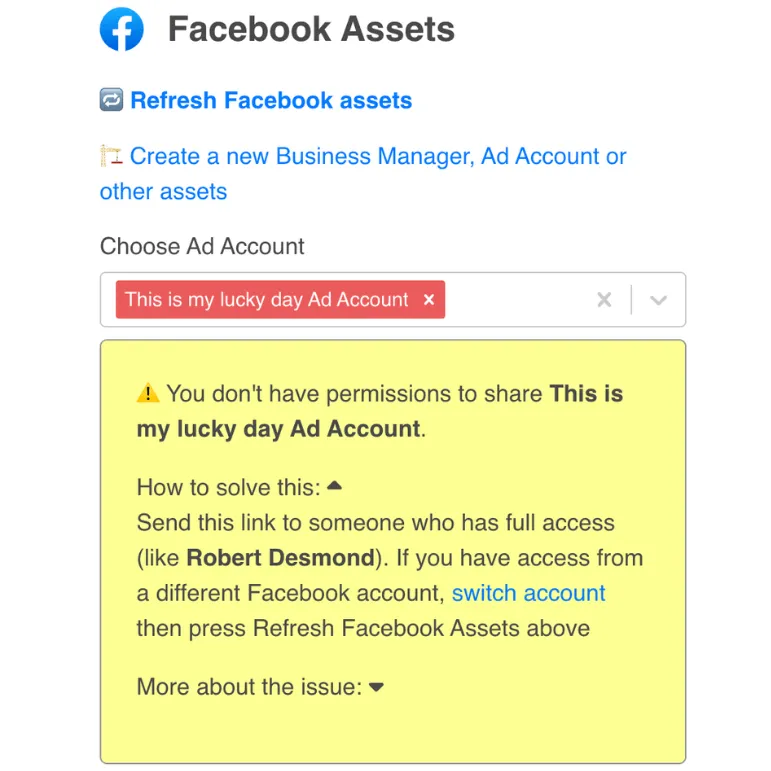
✅ Tools like Leadsie’s Access Detective give you a more scalable way to identify who has access across client accounts.
Instead of repeating the same manual checks and back-and-forth for every client, you can send a secure access link and quickly see what’s blocking access.
It helps identify who already has permissions, so your client can contact the right person, or flags when access exists but isn’t set up correctly, and shows how to fix it.
In some cases, Facebook may show a “Give Feedback on This Business” option if your Page is owned by a Business Account that’s not actively managed.
This doesn’t appear for everyone, but if you do see it, you can use it to flag potential issues such as unauthorised access or incorrect ownership.
You should find this under Page Settings > Page setup > Page access and it should look something like this:

If available, click the button and choose the option that best matches your situation. For example, if you don’t recognize the person or business that owns your Page, select “Unauthorized access.”

Once submitted, your request is sent to Facebook support for review, and they may follow up with you for more information (it typically takes 24 hours).
If none of the previous methods work, your final option is to contact Meta support directly and submit a Page ownership request.
In that case, it is important that you know exactly what you will have to provide to them, and we’ve got the exact template for you to follow below.
These are the three steps to filing a Page admin dispute with Facebook support:
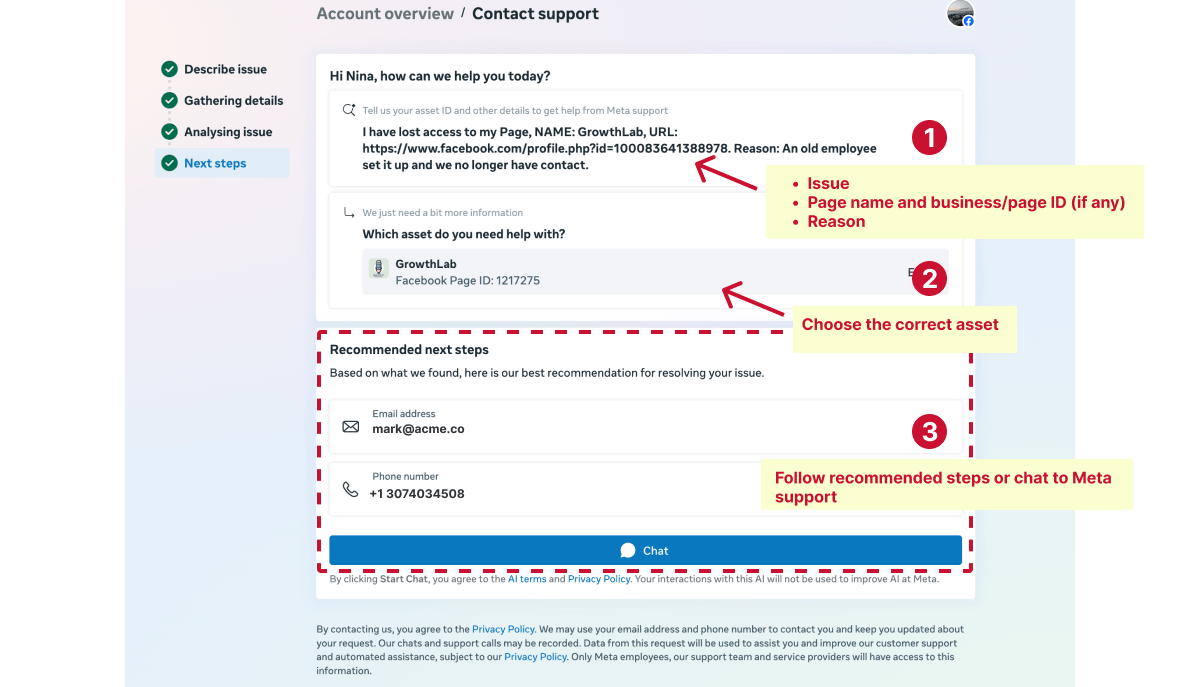
Go to Facebook Support here and type out the issue using this format:
I have lost access to my Facebook Page <name>, <business ID>. Reason: <state your reason here>.
You’ll then be asked to select the asset you need help with (in this case, the Page).
Meta may suggest recommended next steps automatically (for example, pointing you to an existing admin). If that doesn’t resolve the issue, you can choose to chat with support directly.
Prepare these three documents before you contact support, otherwise, your request will not be considered. You have to be authorized to make this claim of ownership on a Facebook Page.
📑 Identification
A valid government-issued photo ID, such as a current driver's license or a passport. See the other types of IDs accepted.
📑 Attestation letter
Create a PDF letterhead with the name of the individual or business, address, phone number, and official company logo.
If you are an agency filing on behalf of your client, use your company's letterhead.
📑 Proof of ownership
To prove that you are authorized to regain access to the Page, you can include the past three Ad account invoices/billing statements (if any). Other common ownership documents include certificates of incorporation, bank statements, business licences or permits, tax certification and licences.
🔗 Full list of documents needed to submit a Page admin dispute.
Once submitted, Meta will review your request and may follow up with additional questions or documentation.
Don't have the time to submit your own admin dispute request for Page recovery? Let the professionals handle it for you. Click the button below, fill out the form and get help from our trusted partner Metaphoric (ex-Meta employees!)
💡 Tip: Once you’ve regained access, don’t stop there. Make sure your Page is properly set up and optimized so you don’t run into issues again.
If you’ve suddenly lost access to your Facebook Page, it may be because your account, or another admin’s account, was compromised.
Approximately 300,000 Facebook accounts are hacked every day and it usually happens when:
⚠️ A hacker gains access to a personal profile and adds themselves as an admin
⚠️ An admin is tricked into giving access (e.g. phishing or scams)
⚠️ Access is removed through Meta Business Suite or Business Portfolio
Business owner Kristen Nordquist described how a hacker “added themselves as an admin” and removed other users, turning a compromised account into a full Page takeover. And for businesses, the impact is real: social media hacks have been linked to an average 23% drop in revenue.
Here’s what you can do to regain access and limit the damage:
If you’ve lost access to the Page (whether your account or another admin’s was compromised), submit a recovery request using Facebook’s Page recovery form.
This is typically the fastest way to recover a hacked Page, especially if Meta can confirm it was compromised.
Note: If you’re an agency helping a client, they’ll need to submit the request from their own account.
🛑 Can’t submit the form? Make sure you’re logged into the affected account. If that doesn’t work, try Option 2 instead.
If you can’t log in to submit the form, visit facebook.com/hacked on a device that you've used to log in to Facebook before, and select the issue.

You’ll be prompted to reset your password and review recent activity.
This helps prevent further access and stops the attacker from regaining control.
While less common, you may have lost access to your Facebook Page because your personal account was suspended or disabled.
Facebook can disable accounts that violate its Terms or Community Standards, sometimes without prior warning.
You’ll usually know this has happened if:
At this point, your account is no longer visible to others, and you won’t be able to access your Page.
👉 To appeal a suspension, log in to Facebook and follow the on-screen prompts to submit an appeal (you typically have up to 180 days).
If your appeal is unsuccessful, or you don’t submit one within the time limit, your account may be permanently disabled.
👉 If you don’t see a suspension message or receive an email, the issue may be a login problem, or your account may have been deleted by someone with your password.
Unfortunately, deleted accounts cannot be restored.
In some cases, you don’t actually need to “recover” a Facebook Page; you just need the right permissions to manage it.
⚠️ If you’re trying to regain full ownership or admin control, you’ll need to follow the recovery methods covered earlier in this guide. This option is best when the Page is still owned by someone else, and you simply need partner access.
This is especially common for agencies, freelancers, or teams managing client accounts, where the Page remains owned by the client or another business.
Instead of trying to transfer ownership, you can request access through your Meta Business Portfolio.
📝 Before you start, make sure your Business Portfolio has a primary Page set up.
Once that’s done, here’s how to request access to a Facebook Page:
1. Go to Settings in Meta Business Suite
2. Under Accounts, select "Pages"
3. Click Add > Request shared access to a Facebook Page

4. Enter the Page name or URL and select the correct Page.
5. Choose your access level:
Your request will be sent to someone with full control of the Page or its Business Portfolio, and once approved, the Page will appear in your account.
👉 Remember: even with full control, the Page will still show the original business portfolio as the owner.
There are many ways to lose access to your Facebook account and Page, even if you've never shared your password with anyone.
While phishing and hacking risks are always present, these steps can significantly reduce your risk:
Most account takeovers start with weak or reused login credentials, so this is the first place to tighten things up.
If it’s available to you, you can also enable Advanced Protection. This adds an extra layer of security by scanning your account for vulnerabilities and monitoring for suspicious activity.
Even if your login is secure, your Page can still be at risk if the wrong people have access.
Over time, it’s common for businesses to accumulate old admins like past employees, agencies, or collaborators. If those accounts aren’t secure, your Page isn’t either.
As a general rule, it’s a good idea to review your Page access:
When reviewing access, look for:
🔎 People who no longer work with your business
🔎 Duplicate or unclear roles
🔎 Anyone with full control who doesn’t need it
🔎 Remove outdated users from your Page
🔎 Keep at least one trusted backup admin
Many hacks happen because someone clicks the wrong link.
It’s easy to miss, especially when emails look like they’re coming from Facebook.
❗ Remember: Facebook will never ask for your password via email
For larger teams, relying on individual Facebook accounts can create unnecessary risk.
That's why some organizations are moving toward setups like managed Meta accounts, which separate personal and business access. This gives companies more control over who can log in and makes it easier to manage access as team members join or leave.
If you’re an agency, managing access across multiple client accounts can quickly become time-consuming, especially when you’re relying on back-and-forth instructions or navigating Meta settings for every client.
Client onboarding tools like Leadsie simplify this process.
Instead of manually requesting access, you can send your client a secure link. They open it, follow a few prompts, and grant you access within minutes.
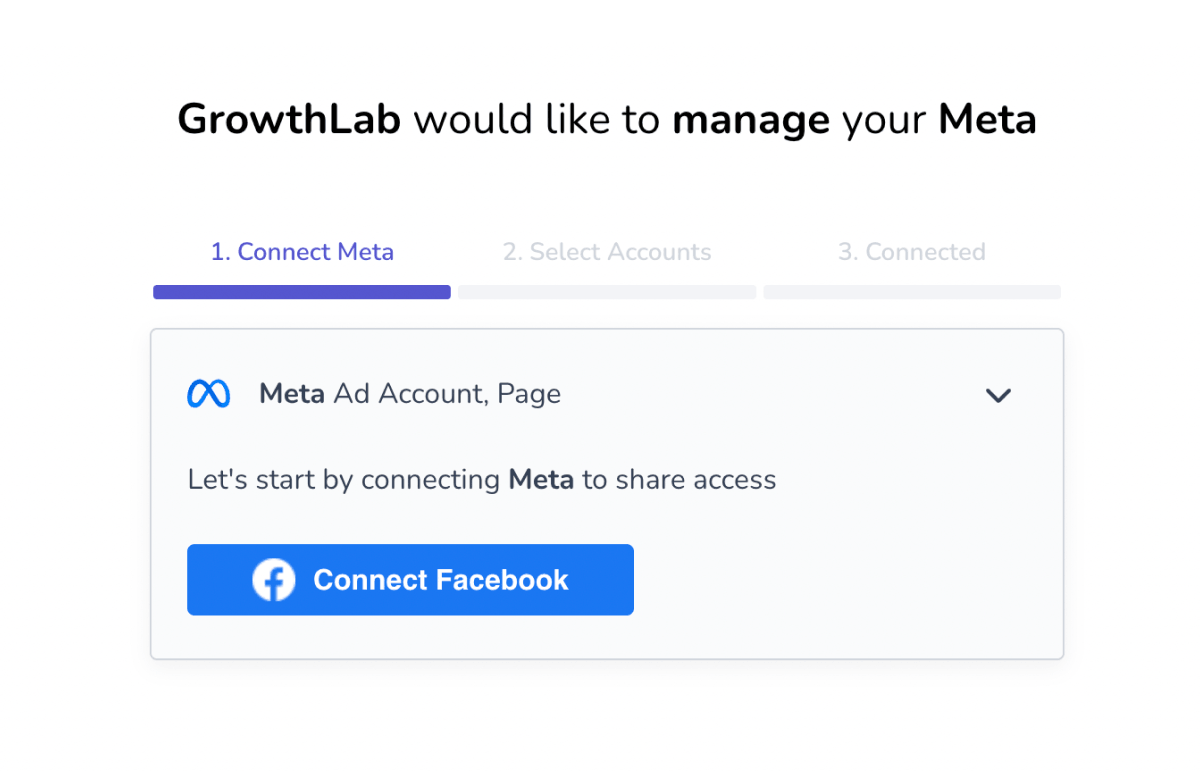
The same link can also be used to request access across 31+ social and marketing platforms (not just Facebook), which makes it much easier to standardize your onboarding process.
This doesn’t replace Meta’s security, but it helps reduce common access issues, like unclear ownership, missing permissions, or relying on the wrong account, which can make it harder to regain access later.
Because your account is managed by Meta, you don’t have full control over it if it’s suspended, hacked, or restricted. That means your content, audience, and communication channels can disappear overnight, with limited ways to recover them.
To reduce that risk, it’s important to have other channels you fully or partially control:
These act as a safety net, so even if you lose access to your Facebook Page, your business can still operate and stay visible.
Working with marketing partners or agencies? There’s an easier, faster, and more secure way to share access to your business accounts.
With Leadsie, you can grant access to all your marketing accounts in just a few clicks.
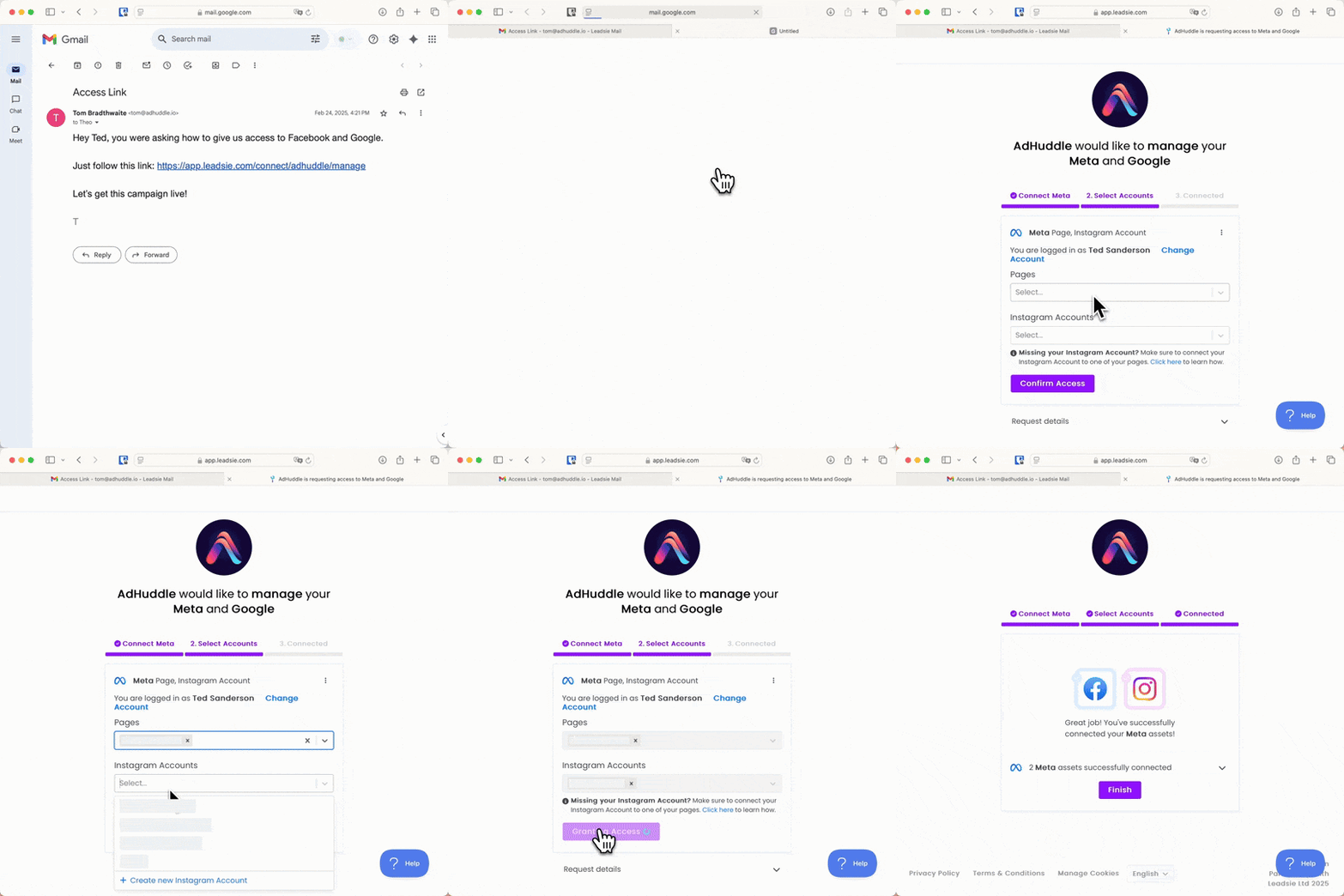
Leadsie is a client onboarding software that simplifies requesting and giving access to marketing assets, social media, and ad accounts with one secure link. Give access to your Facebook, Instagram, Google, TikTok, Shopify, LinkedIn, and 20+ other accounts without sharing passwords.
Leadsie speeds up client onboarding by replacing manual access requests with one secure approval link. Your agency partner sends it to you, you approve the permissions you want to give, and they get instant access.
✅ Approve the exact access your partners need
✅ Keep all your permissions secure and easy to manage
✅ Reduce onboarding time by more than 50%
✅ Avoid costly mistakes like giving the wrong level of access
✅ Get projects started faster
🎁 If your agency isn’t using Leadsie yet, share this with them—they can try it free for 14 days (no credit card needed)!
P.S. It's risk-free and you get to keep the account connections after the trial ends 🙌

A self-confessed marketing geek with a fetish for spreadsheets, Johannes is in his element when solving problems and building systems for solutions. When he’s not working on Leadsie, you’ll find him sharing his expertise with other startups as a mentor for 500 Global. In his spare time, he enjoys flinging a ball around a tennis court and cycling up daunting-looking mountains.


Clients struggling to share access to their
accounts? Get the access you need in minutes with a free trial of Leadsie.
Approved by Meta, Google & Tiktok
Keep access to accounts if you cancel
Secure & 100% GDPR compliant
Delete your onboarding PDF. Cancel the video call. Just send one link, and get hassle-free access to 13+ platforms in minutes. Start free today.
Approved by Meta, Google & Tiktok
Keep access to clients' accounts if you cancel
Secure & 100% GDPR compliant
If your Page has the option to “switch into” it from your personal profile, it’s the New Page Experience. If you see older-style tabs like “Page Roles” directly in settings, it’s a Classic Page. This matters because the recovery path and where “Page Owner” appears is different for each.
Not always manually, especially if the Page is inside someone else’s Business Portfolio. In this case, tools like Leadsie’s Access Detective allow the current Page owner to click one link, and you instantly see who the admins are.
Meta requires three things:
Missing one of these will delay the recovery.
Most admin disputes are reviewed within 24–72 hours, depending on support volume and document accuracy. Cases involving hacked admins or security flags may take longer.
Yes. If you appeal your suspended account within 180 days, you may regain access to your profile (and any Pages tied to it). If the account has been permanently disabled (e.g., not appealed within 180 days), then you will likely need to go through an admin-dispute process to reclaim Page ownership.
Questions unanswered? Check out our help center or get in touch 🤠